Order, Chaos, and the Arrogance of Intervention
2026-08-11
We speak of order as though we know what it is. A forest is cleared and planted in rows. We call it ordered. A river wanders across a floodplain, changing course over centuries, depositing sediment here and removing it there. We straighten it, contain it between engineered banks, and call the result controlled. Stone fractures under pressure. Trees grow toward available light. Lichen spreads across rock without regard for symmetry. Wind moves sand into forms no hand designed. We look upon these things and frequently describe them as wild, irregular, random—chaotic. Then the human hand arrives. We measure. We divide. We align. We prune. We classify. We remove. And when the world begins to resemble the geometry of our own thinking, we call it order. But what, exactly, have we proven? Perhaps nothing except our preference for arrangements we can easily understand.
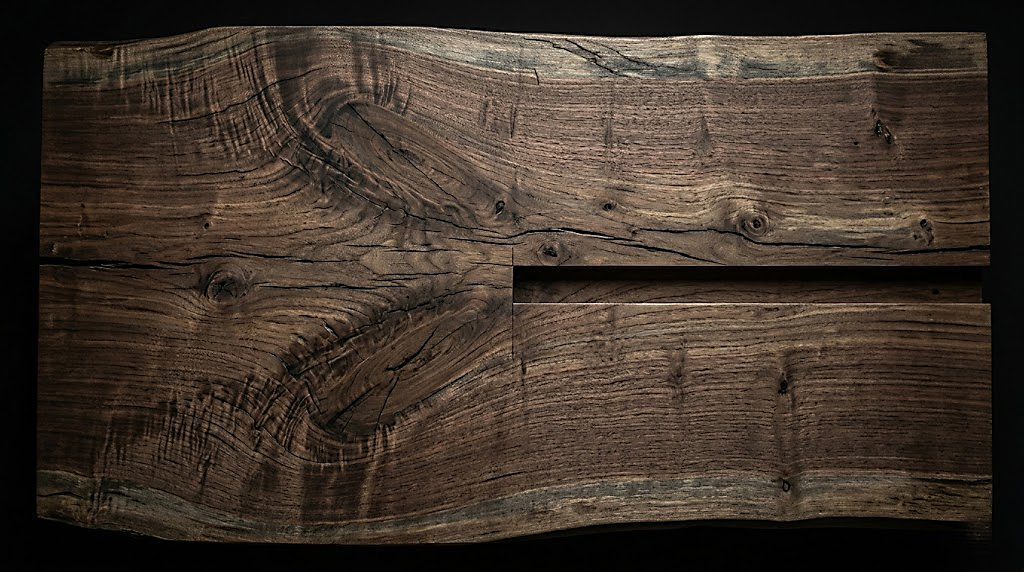
The Conceit of Order
Human intelligence is fundamentally an engine of pattern recognition. We find relationships, establish categories, infer causes, and construct systems through which an otherwise incomprehensibly complex world becomes legible. This capacity has allowed us to create mathematics, architecture, agriculture, language, music, machines, and cities. But there is a subtle danger hidden within it: legibility can be mistaken for order. What we understand as ordered is often simply that which conforms to a system we recognize. A grid is immediately legible. A straight line is easily described. Repetition establishes expectation. Symmetry allows one part to predict another. Human beings encounter these arrangements and intuitively perceive organization. Nature is less accommodating. Its systems overlap simultaneously. A forest is governed by competition for light, decomposition, hydrology, geology, weather, microorganisms, succession, predation, reproduction, and disease. The resulting form may appear irregular precisely because the underlying order is extraordinarily complex. The absence of obvious geometry is not the absence of order. What we call chaos may simply be order beyond the resolution of our understanding.
The Human Hand
Consider a handful of earth thrown against a surface. Some particles adhere. Others fall. Larger fragments respond differently from fine mineral dust. Moisture changes adhesion. Gravity pulls everything downward. The angle and velocity of the throw influence distribution. The texture of the surface determines what it accepts and what it rejects. The resulting field appears random. But was it? Every particle arrived where it did because of physical relationships. Nothing violated gravity. Nothing escaped material properties. Nothing occurred outside the conditions of the event. The maker may have relinquished precise control over the outcome, but relinquishing control is not the same as eliminating order. Now consider the same material deliberately arranged by hand. Fragments are selected. Distances are considered. Shapes are balanced. Areas of density are contrasted against areas of absence. Certain pieces remain while others are removed. The result becomes recognizably composed. We are tempted to say that chaos has become order. But something else has happened: one ordering system has been replaced by another. The first emerged through physical relationships largely beyond the maker’s control. The second emerged through human judgment. Why should the latter automatically possess greater legitimacy?
Intervention
This question becomes consequential far beyond the boundaries of philosophy. Human history is filled with interventions undertaken in the name of order. We straighten rivers. We divide land. We suppress fire. We eliminate species we consider undesirable. We cultivate one plant while removing dozens of others as weeds. We replace ecosystems with landscapes whose boundaries are easily understood from above. Sometimes these interventions are necessary. Frequently they are extraordinarily beneficial. Human intervention is not inherently destructive, just as natural processes are not inherently benevolent. The problem lies elsewhere. It lies in assuming that our intervention constitutes order simply because we are the ones imposing it. There is arrogance in believing that nature becomes ordered only after becoming legible to us. A meadow is not disorganized because it lacks rows. A river is not confused because it meanders. A stone is not malformed because it fractured asymmetrically. These forms are records of relationships—evidence of forces acting upon matter over time. Their order is not necessarily ours. Latent Form and the Problem of Discernment This tension between legible arrangement and inherent nature is not merely a question for ecologists and planners; it is the central dilemma of the artist’s studio. Latent Form Theory proposes that creation is not an act of accumulation, but an act of revelation: the discovery of inherent order through disciplined choice. Its primary mechanism, Essential Subtraction, asks the maker to remove what obscures rather than continually add what decorates. Yet this introduces a heavy responsibility. What gives the maker the standing to intervene at all? Discernment is necessary, but discernment is fallible. A maker can remove noise, but a maker can also remove information they simply failed to understand. The distinction may not become apparent until much later. This does not invalidate intervention; it relocates the question. The measure of a maker’s cut was never going to be whether it was objectively correct—no such certainty is on offer. The measure is whether the maker remained answerable to what the material was doing while they made it. Not: did I find the one true order hidden inside this thing? But: did I stay in relationship with it, or did I simply impose what I already intended to see? This is, at bottom, why Latent Form Theory is as much a philosophy of judgment as it is a philosophy of form. The discipline is not a method for arriving at certainty. It is a method for acting well in its absence. Perhaps the disciplined eye is not the eye most capable of imposing order, but the eye most capable of recognizing orders other than its own. Material Intelligence begins here. To work with a material is not simply to determine what can be done to it, but to observe what the material is already doing. Grain changes direction. Stone fractures. Earth settles. Fibers bend. Pigments migrate. The maker participates in these behaviors, but does not author them entirely. Creation is neither absolute control nor absolute surrender—it is negotiation. Terra Consider this negotiation within a physical work—a painting of mine titled Terra, made as a study in latent form. Its surface is divided without being rigidly partitioned. On one side, earth has been thrown against the plane, allowed to behave according to forces only partially controlled by me. Fragments collide, pigment scatters, and material adheres or falls according to momentum and texture. Elsewhere on the canvas, the same earth has been deliberately organized. Shapes emerge, relationships clarify, and the hand of the maker becomes legible. Between these territories lies no hard boundary; one condition gradually dissolves into the other until the viewer can no longer determine where accident ends and intention begins. The conventional interpretation seems obvious: chaos on one side, order on the other. But turn the proposition around. The uncontrolled field represents an immensely complicated natural order—matter responding freely to gravity, momentum, adhesion, and conditions beyond the maker’s control. The meticulously composed field represents the disruption. Human intervention has taken a system that already possessed order and forced it to conform to another. Now the work becomes uncomfortable. Which side is chaos? Which side is order? There may be no correct answer. That uncertainty is the point.
The False Boundary
There is, however, a deeper premise to question. The distinction between nature and human intervention assumes that humanity exists somehow outside nature. We do not. The hand arranging the earth is composed of the same matter as the earth being arranged. Human perception arose through natural processes; so did our desire for symmetry, pattern, hierarchy, rhythm, and proportion. If a bird constructs a nest, we readily describe the nest as part of nature. If a beaver redirects a river, the resulting wetland remains an ecosystem. When humans redirect a river, however, we frequently describe the result as human intervention upon nature. While that distinction is practical, philosophically it is incomplete. If humanity is a product of nature, then human intervention cannot be entirely external to natural order. I am not resolving this. I am holding two things at once on purpose: the human/nature boundary is real enough to matter practically, yet perhaps not real in the way we assume when we use it to grant our own order special status. Perhaps there are not two opposing systems, only different manifestations of the same system, operating at different levels of intention and complexity. The thrown earth and the arranged earth do not represent chaos versus order, or nature versus humanity—they represent two expressions of the same underlying reality. What follows from that, I leave to the reader.
What Remains
If creation is an act of revelation through disciplined choice, that revelation requires constant humility. The maker must continually ask whether they are discovering inherent relationships or merely imposing personal preferences. That distinction may never be fully resolved. Perhaps it shouldn’t be. The purpose of discernment is not to achieve absolute certainty, but to become sufficiently attentive that intervention ceases to be automatic. The disciplined maker must stand before the bending line and understand why it curved before attempting to straighten it. To remove an irregularity without understanding what produced it is not editing—it is erasure. Before organizing an apparent chaos, we must ask whether an order already exists that we simply have not learned to see. And before declaring any result an improvement, consider the possibility that the thing brought under control has lost something vital precisely because it now conforms to us. Chaos is not the opposite of order. Chaos is often merely the name we give to an order that has not yet explained itself to us.
Essay Series: Origins of Latent Form Theory Themes: Material intelligence, perception, essential subtraction Author: Jason Deters